Forbes: UT Proposes Sick Tax To Pay For ObamaCare

By  Nic Horton, Jonathan Ingram, and Josh Archambault Mr. Horton is a Policy Impact Specialist, Mr. Ingram Research Director, and Mr. Archambault a Senior Fellow at the Foundation for Government Accountability

After the legislature blocked his Obamacare Medicaid expansion plans in 2014 and 2015, Utah Governor Gary Herbert (R) began working with legislative leaders to negotiate some kind of “compromise” to expand the program to more than 100,000 able-bodied adults. Although the deal is being negotiated in secret, some details have been leaked to the public.

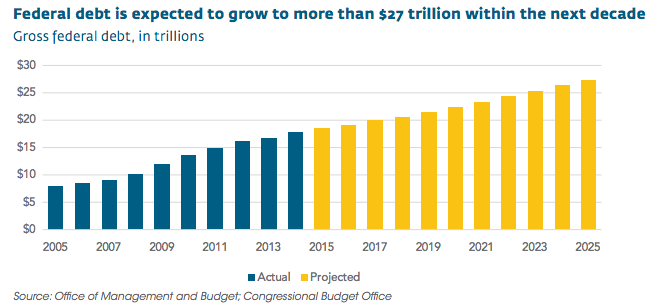
According to the few specifics made public, the biggest component of the negotiated framework is to levy a new “assessment” on medical providers in Utah to help pay for the state’s share of expansion. But the so-called assessment is simply a new Obamacare tax on the sick that will not only raise health care costs for all Utahns, but add significantly to the national debt. Continue reading

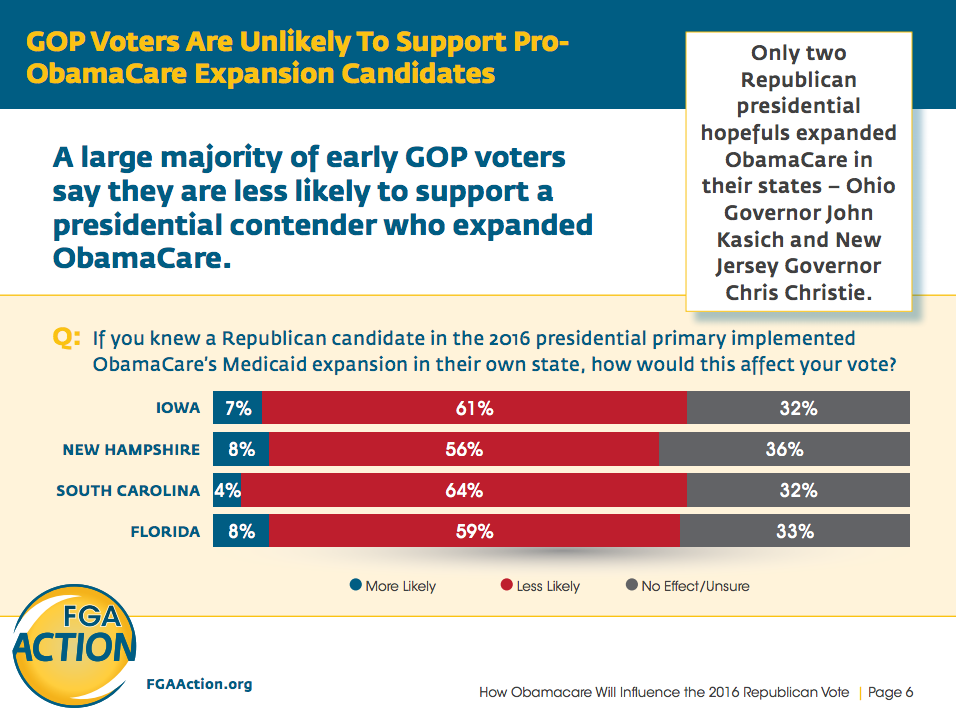
Poll: Early GOP Primary Voters Uninterested in ObamaCare Candidates

FGA Action has released a new poll that examines how ObamaCare and ObamaCare’s Medicaid expansion could shape the 2016 Republican presidential primary.

The poll surveyed more than 2,000 likely GOP voters in 4 early primary states — Iowa, New Hampshire, South Carolina, and Florida.

Screenshot 2015-09-14 11.19.39

Continue reading

Forbes: AK Lawmakers Hire Star Lawyers to Stop ObamaCare Expansion

By Jonathan Ingram, Nic Horton, and Josh Archambault — Mr. Ingram is Research Director, Mr. Archambault is a Senior Fellow, and Mr. Horton is Policy Impact Specialist, at the Foundation for Government Accountability.

Alaska Governor Bill Walker (I) announced in mid-July that he was moving forward with plans to unilaterally expand Obamacare in the state. As we’ve previously written here at Forbes, Walker’s expansion plan is not only bad policy, it’s also likely illegal. Now, a courageous group of Alaska lawmakers – led by Senate President Kevin Meyer and House Speaker Mike Chenault –  are standing up to Gov. Walker’s attempted end-run around the legislature and hiring an all-star legal team to block Walker’s illegal actions.

Walker’s Unilateral Obamacare Expansion Violates Alaska Law

Alaska law clearly prohibits the governor from expanding Medicaid to any “additional groups … unless approved by the legislature.” This means that Gov. Walker could only expand Medicaid to a new class of able-bodied childless adults if this coverage group was already authorized by state law. Continue reading

Forbes: AR’s ‘Health Independence Accounts’ Are Making Obamacare Worse

By Jonathan IngramNic Horton and Josh Archambault Mr. Ingram is Research Director, Mr. Horton a Policy Impact Specialist, and Mr. Archambault a Senior Fellow at the Foundation for Government Accountability

Arkansas’s Obamacare Medicaid expansion has been a costly misadventure. The expansion has been so misguided in fact, that lawmakers voted earlier this year to end it, effective December 31, 2016.

That hasn’t stopped state bureaucrats from scurrying to institute a new component of expansion that makes the program even worse. Under this plan, some enrollees are asked to contribute nominal amounts to new “Health Independence Accounts,” or HIAs, which were supposed to mirror health savings accounts.

But these new HIAs are nothing like real health savings accounts and were destined to fail from the beginning. Now that the program is up and running, the evidence is mounting: so-called “independence” accounts are actually reducing enrollees’ “skin in the game,” and costing even more money for taxpayers.

Arkansas legislators meet in the House chamber at the Arkansas state Capitol in Little Rock, Ark. (AP Photo/Danny Johnston, File)

Health Independence Accounts Are Nothing Like Health Savings Accounts

Under this new Obamacare Medicaid expansion tweak, enrollees above the federal poverty line are “required” to make monthly contributions to HIAs. But the truth is that this “requirement” is more like a mere suggestion. If enrollees refuse to contribute to their accounts, they aren’t removed from the program.

These suggested contributions start at just $10 per month. But unlike real health savings accounts, Private Option enrollees will not use funds in their HIAs to pay for their own medical care. Instead, the money will simply sit in enrollees’ accounts until they leave the program. At that point, they can take the money with them and use it toward other health care costs. Continue reading

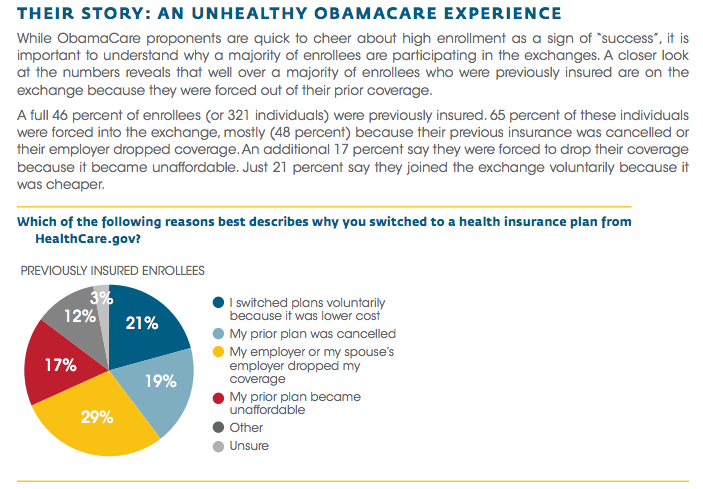
FGA: What Exchange Enrollees Want, After King v. Burwell

A new, one-of-a-kind poll released yesterday by the the Foundation for Government Accountability takes a look at what ObamaCare exchange enrollees want in the wake of the King v. Burwell ruling. The poll surveyed exchange enrollees in only the 34 states that have not set up ObamaCare exchanges. Many of these enrollees would be personally impacted by a pro-King ruling.

Here’s a snapshot:

Screenshot 2015-06-16 14.19.05

Continue reading

Forbes: AR DHS Director Misled Lawmakers On Obamacare Waiver

By Jonathan IngramNic Horton and Josh Archambault Mr. Ingram is Research Director, Mr. Horton is Policy Impact Specialist, and Mr. Archambault is a Senior Fellow at the Foundation for Government Accountability.

Arkansas bureaucrats are wasting millions of dollars providing Medicaid benefits to people no longer eligible for the state’s Obamacare expansion. But is that just the tip of the iceberg?

Last month, internal e-mails from the Arkansas Department of Human Services surfaced, revealing that the state had never bothered to verify that individuals enrolled in Obamacare’s Medicaid expansion were still eligible for benefits. According to data provided by state officials, this is costing taxpayers up to $20 million each and every month.

We previously questioned why the state hadn’t started the redetermination process yet – which should have begun months ago. After all, federal law requires states to verify Medicaid enrollees’ eligibility at least once per year.

Image and video hosting by TinyPic

Department of Human Services Director John Selig (Photo: Log Cabin Democrat)

As we reported at the time, state officials contended that they had received a temporary waiver from the Obama administration, allowing them extra time to perform the eligibility checks. But it turns out that no formal waiver ever existed. Worse yet, a recent follow-up letter from the Obama administration may generate more questions than answers.

No Waiver Existed

After news broke that the state wasn’t performing the required eligibility checks, a number of reporters and lawmakers reached out for a copy of that waiver. Such a waiver would be pretty important – without it, Arkansas would be violating federal law.

But according to internal e-mails and other communications, no such waiver actually existed. Questions about the redetermination process sent state officials scrambling for cover.

That cover came on April 27, 2015, when the Obama administration retroactively approved Arkansas’ delay for all redeterminations that should have been conducted in 2014. The letter states:

[The Centers for Medicare and Medicaid Services] is now providing Arkansas with authority under section 1902(e)(14)(A) of the [Social Security Act] to delay eligibility renewals scheduled for January 1, 2014 through December 31, 2014 for 9 months, until October 1, 2014 through September 30, 2015. The state will continue to act on changes in circumstances, including changes in income.

Obama’s Letter Provides More Questions Than Answers

Unfortunately, this letter provides more questions than answers. First, it says that the Obama administration is now providing Arkansas the authority to delay its eligibility redeterminations. Does that mean that Arkansas was operating without that authority prior to April 27th? It certainly seems that way.

The Department of Human Services also contends that this letter allows them to delay all redeterminations until September 2015. But that is not, in fact, what the letter says. The letter allows them to delay redeterminations due in 2014 “for 9 months.” While a redetermination due on December 31, 2014 would not be due until September 2015 under this letter, one originally due on January 1, 2014 was actually due back in October 2014. This means that all redeterminations originally scheduled between January and August of last year should already have been conducted.

But even more worrisome is that the letter limits the delay exclusively to “eligibility renewals scheduled for January 1, 2014 through December 31, 2014.”It provides zero authority to delay redeterminations that should have been scheduled in 2015. So why hasn’t the state conducted the mandatory redeterminations that were due in January, February, March and April?

The Redetermination Process Should Have Begun Months Ago

Regardless of whether or not Arkansas’ actions are approved by Obama, they should be worrisome to taxpayers everywhere. The state has yet to redetermine eligibility for a single Medicaid expansion enrollee. By now, the state should have re-checked eligibility for more than 170,000 enrollees. Another 70,000 should be due for verification later this year or early next year.

To make matters worse, the Department of Human Services expects that up to 40,000 enrollees are still receiving benefits even though they’re no longer eligible. If those estimates are correct, taxpayers could be on the hook for up to $20 million per month to provide Medicaid expansion benefits to people no longer eligible.

Worst of all, state officials have facilitated this fraud by asking for waivers and continuing to kick the can further down the road. Meanwhile, nearly 3,000 children and adults with developmental disabilities are sitting on Medicaid waiting lists. Some of them have been waiting eight years or more for their needed home- and community-based services. They continue to wait, while Arkansas bureaucrats provide Obamacare welfare to 40,000 able-bodied adults who aren’t even eligible.

Welcome to Obamacare.

This article originally appeared at Forbes on May 11, 2015.

FGA: States Can’t Trust Washington To Fund ObamaCare Expansion

Screenshot 2015-04-09 15.02.16

A new report from the Foundation for Government Accountability highlights a string of broken funding promises by the federal government:

Examples of broken promises and unfunded mandates pushed on states by the federal government are virtually limitless. The Obama administration withheld $111 million in mineral royalties that had been promised to states. The Federal Highway Administration has cut back the transportation funding it had previously promised states. The Centers for Disease Control and Prevention has reduced or cancelled promised grants to state and local governments. The Department of Commerce revoked funding for a large-scale broadband project, designed to bring online access to schools and health care facilities in Louisiana. The Federal Emergency Management Agency suddenly revoked more than half a million in funds for a small Minnesota township, leaving it vulnerable to significant financial and legal liability. Stories of broken federal promises like these can be found all over the country.

The report, authored by Jonathan Ingram and Nic Horton of FGA, is available here.

Forbes: New Poll Confirms Voters Don’t Want State Obamacare Exchanges

By Jonathan Ingram, Nic Horton and Josh Archambault – Mr. Ingram is Research Director, Mr. Horton is Policy Impact Specialist, and Mr. Archambault is a Senior Fellow at the Foundation for Government Accountability.

Last week, the Foundation for Government Accountability released a groundbreaking poll of voters in federal exchange states that provides valuable insight into how voters want policymakers to respond to the pending King v. Burwell Supreme Court ruling.

In short, voters don’t want their state legislators to rescue Obamacare should the Supreme Court rule that health insurance subsidies cannot flow through HealthCare.gov. They blame Congress for a poorly written law and don’t want or expect states to clean up Washington’s mess. In fact, they’re prepared to vote against state lawmakers who try to set up Obamacare exchanges.

Voters Don’t Want To Live in An Obamacare State

If the Supreme Court strikes down subsidies in federal exchange states, voters don’t want their state legislators to rescue Obamacare. They see the issues presented in the King v. Burwell case as a problem created by Congress and the IRS; they don’t think states should bail them out.
Image and video hosting by TinyPic Continue reading

Forbes: Latest Florida Proposal Is Still Obamacare

By Nic Horton, Jonathan Ingram, and Josh Archambault  Mr. Horton is a Policy Impact Specialist, Mr. Ingram is Research Director, and Mr. Archambault a Senior Fellow at the Foundation for Government Accountability.

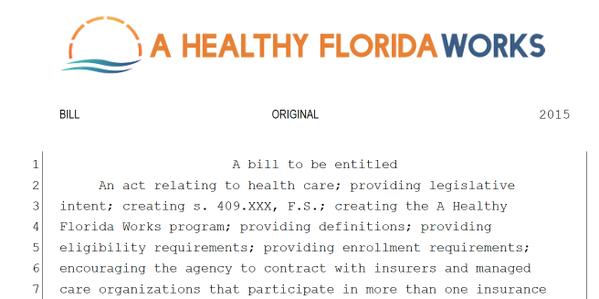
The Florida hospital lobby is persistent, to say the least. Barely two years after the Florida Legislature defeated Obamacare Medicaid welfare expansion, the hospital lobbyists are back at it, rolling out yet another Obamacare expansion plan, this time with the help of local chambers of commerce and other groups. The hospitals’ new coalition even has a clever name for itself: “A Healthy Florida Works.”

These actions have prompted some speculation that Florida lawmakers may flip flop on their principled opposition to this massive expansion of Medicaid welfare. Insiders are also reporting that the hospitals are preparing to dump even more money and resources into lobbying for Obamacare expansion—on top of the more than 250 lobbyists hospitals already deploy to Tallahassee every year.

Image and video hosting by TinyPic

In the past, lawmakers have taken a thoughtful, careful approach to the Medicaid expansion question. After setting up a special committee to study every aspect of the issue and gathering all the facts, they rightly rejected every effort to implement it – even when that meant standing up to a wavering Republican governor, the chairman of the Democratic National Committee, and the full force of the Obamacare lobby. Continue reading

Two Memos On Bad Health Care Proposals

downloadFGA Action recently published two memos on bad health care proposals in two states — Arkansas and Montana.

The Arkansas memo focuses on SB828, a bill that would delegate broad policy-making authority to state bureaucrats and allow them to pursue 1332 waivers:

Senate Bill 828 gives the executive branch virtually unlimited authority with no meaningful legislative oversight. Most disturbing is the fact that some of the bill’s defenders have falsely said that the bill actually requires legislative approval. Sadly, the bill’s express language confirms this is not the case.

Senate Bill 828 provides that “any waiver submitted [by the governor] under this section shall have legislative approval” to implement those waivers.6 The bill does not say that waivers shall require legislative approval, but that they shall be deemed to have already received legislative approval.

You can read the full SB828 memo here.

Continue reading