Townhall: No, Arkansas’ Obamacare Expansion Isn’t Saving Taxpayers Money

According to state law, Arkansas’ failed Obamacare expansion is set to expire at the end of this year. But Governor Asa Hutchinson has proposed overriding that deadline – which he signed into law last year – to continue providing welfare to able-bodied adults forever.

Hutchinson’s chief argument is that ending the program would create “a $100 million annual budget hole” due to lost budget “savings.” It’s a familiar refrain, used by former Democratic Governor Mike Beebe for years. There’s just one problem: it’s not true.

Arkansas’ so-called Private Option Medicaid expansion isn’t saving taxpayers money and allowing it to end won’t necessitate a massive tax increase or trigger the zombie apocalypse. In fact, allowing expansion to sunset would save taxpayers billions of dollars. Continue reading

Platte Institute: Arkansas Not a Model for Nebraska

A new paper by Jonathan Ingram and Nic Horton examine the impact an Arkansas-style Medicaid expansion would have on Nebraska:

Nebraska legislators have taken a thoughtful approach to the Affordable Care Act, carefully reviewing the evidence and ultimately declining to expand Medicaid to a new class of able-bodied adults under the law. Nevertheless, a small group of legislators lobby their colleagues each year to expand the program. The latest proposal, offered by Senator John McCollister, would copy the expansion models used by Arkansas and Iowa, homes of the highest profile “alternative” expansion models.

Under this approach, able-bodied adults receive regular Medicaid benefits through private health insurance plans sold on the Exchange, rather than through traditional Medicaid managed care. But these expansions have been unmitigated disasters and replicating the results in Nebraska would move the state backwards.

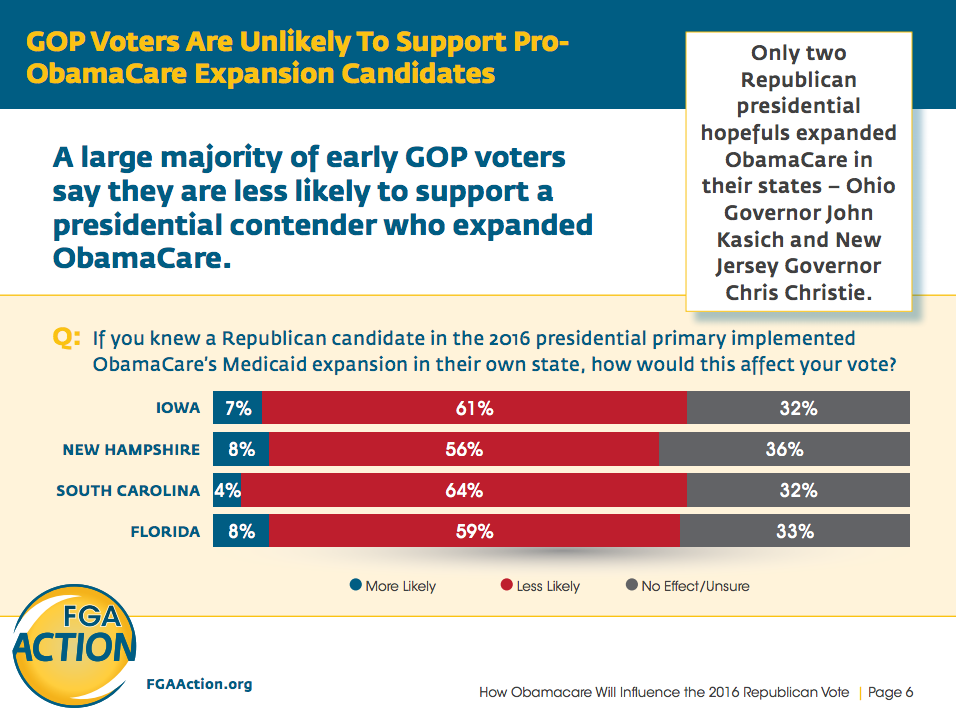
This new approach to Medicaid expansion is unaffordable and unpredictable, pushes adults out of private insurance and into taxpayer-funded welfare, puts the truly needy on the chopping block, discourages work, and shrinks the economy. So it should be no surprise that, last year, Iowa policymakers scrapped the model entirely and Arkansas enacted legislation to repeal the expansion altogether at the end of 2016. Nebraska policymakers should learn from these mistakes, not repeat them.

Read the full paper here.

Townhall.com: How the Senate Just Changed the ObamaCare Debate Forever

Last week, with little fanfare, the U.S. Senate passed a bill to begin dismantling Obamacare. Some pundits have spun the move as little more than “political posturing” or a toothless act that simply fulfills the campaign promises of a newly elected GOP majority. The truth is that this Senate vote is much bigger than Obamacare supporters would like you to believe. In fact, the Senate vote has literally changed the Obamacare debate forever.
The Senate bill repealed the employer and individual mandates, repealed the Cadillac and medical device taxes, eliminated exchange subsidies, and removed the federal government’s authority to run the Obamacare exchanges. All good things.

But what may be the most significant—and least discussed—change is sure to send shockwaves through all 50 state capitals: the U.S. Senate voted to repeal Obamacare’s Medicaid expansion entirely.

To paraphrase Vice President Joe Biden, “This is a big freaking deal.” Continue reading

Forbes: UT Proposes Sick Tax To Pay For ObamaCare

By  Nic Horton, Jonathan Ingram, and Josh Archambault Mr. Horton is a Policy Impact Specialist, Mr. Ingram Research Director, and Mr. Archambault a Senior Fellow at the Foundation for Government Accountability

After the legislature blocked his Obamacare Medicaid expansion plans in 2014 and 2015, Utah Governor Gary Herbert (R) began working with legislative leaders to negotiate some kind of “compromise” to expand the program to more than 100,000 able-bodied adults. Although the deal is being negotiated in secret, some details have been leaked to the public.

According to the few specifics made public, the biggest component of the negotiated framework is to levy a new “assessment” on medical providers in Utah to help pay for the state’s share of expansion. But the so-called assessment is simply a new Obamacare tax on the sick that will not only raise health care costs for all Utahns, but add significantly to the national debt. Continue reading

Forbes: AK Lawmakers Hire Star Lawyers to Stop ObamaCare Expansion

By Jonathan Ingram, Nic Horton, and Josh Archambault — Mr. Ingram is Research Director, Mr. Archambault is a Senior Fellow, and Mr. Horton is Policy Impact Specialist, at the Foundation for Government Accountability.

Alaska Governor Bill Walker (I) announced in mid-July that he was moving forward with plans to unilaterally expand Obamacare in the state. As we’ve previously written here at Forbes, Walker’s expansion plan is not only bad policy, it’s also likely illegal. Now, a courageous group of Alaska lawmakers – led by Senate President Kevin Meyer and House Speaker Mike Chenault –  are standing up to Gov. Walker’s attempted end-run around the legislature and hiring an all-star legal team to block Walker’s illegal actions.

Walker’s Unilateral Obamacare Expansion Violates Alaska Law

Alaska law clearly prohibits the governor from expanding Medicaid to any “additional groups … unless approved by the legislature.” This means that Gov. Walker could only expand Medicaid to a new class of able-bodied childless adults if this coverage group was already authorized by state law. Continue reading

FGA: The ObamaCare Expansion Enrollment Explosion

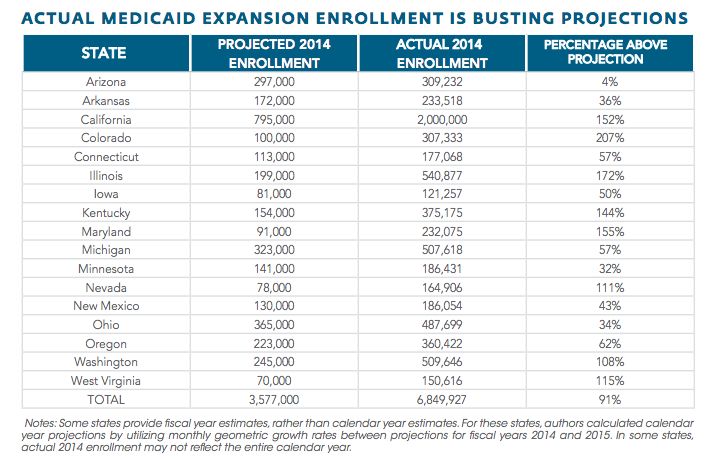
Last week, the Foundation for Government Accountability released a new report on the exploding enrollment in ObamaCare expansion across the country. The report, authored by Jonathan Ingram and Nic Horton, finds that all 17 expansion states with available data were over their Year 1 enrollment projections — by an average of 91 percent. In addition, 16 of the 17 states are already over their projected maximum total enrollment, by an average of 61 percent.

Screenshot 2015-04-27 13.51.56

From the report:

Across the country, states that opted into ObamaCare’s Medicaid expansion have seen the number of able-bodied adults on welfare skyrocket beyond expectations. In fact, after just one year of ObamaCare expansion, several states have already seen more adults sign up for Medicaid welfare than they thought would ever sign up or even be eligible.

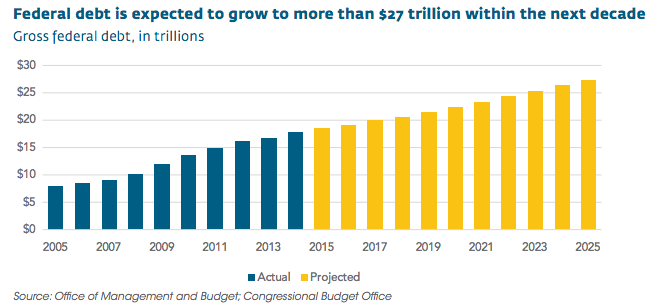
Some politicians have cited these enrollment surges as signs of immense “success.” Taxpayers might disagree, as the economic consequences are sure to be severe. The Congressional Budget Office predicts that Medicaid expansion will discourage work and shrink the economy.1 Recent research suggests that as many as 2.6 million able-bodied adults could drop out of the labor force as a result.2 But the generational burden for future taxpayers to fund this welfare enrollment explosion is now mounting at a faster-than-expected rate, which means higher costs and even more truly needy Medicaid patients put on the chopping block.

The report was released on April 20, 2015. You can view it here.

FGA: States Can’t Trust Washington To Fund ObamaCare Expansion

Screenshot 2015-04-09 15.02.16

A new report from the Foundation for Government Accountability highlights a string of broken funding promises by the federal government:

Examples of broken promises and unfunded mandates pushed on states by the federal government are virtually limitless. The Obama administration withheld $111 million in mineral royalties that had been promised to states. The Federal Highway Administration has cut back the transportation funding it had previously promised states. The Centers for Disease Control and Prevention has reduced or cancelled promised grants to state and local governments. The Department of Commerce revoked funding for a large-scale broadband project, designed to bring online access to schools and health care facilities in Louisiana. The Federal Emergency Management Agency suddenly revoked more than half a million in funds for a small Minnesota township, leaving it vulnerable to significant financial and legal liability. Stories of broken federal promises like these can be found all over the country.

The report, authored by Jonathan Ingram and Nic Horton of FGA, is available here.

Forbes: Latest Florida Proposal Is Still Obamacare

By Nic Horton, Jonathan Ingram, and Josh Archambault  Mr. Horton is a Policy Impact Specialist, Mr. Ingram is Research Director, and Mr. Archambault a Senior Fellow at the Foundation for Government Accountability.

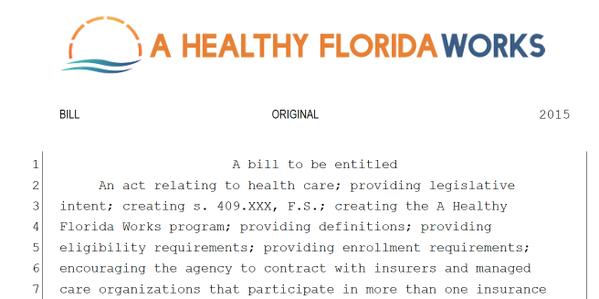
The Florida hospital lobby is persistent, to say the least. Barely two years after the Florida Legislature defeated Obamacare Medicaid welfare expansion, the hospital lobbyists are back at it, rolling out yet another Obamacare expansion plan, this time with the help of local chambers of commerce and other groups. The hospitals’ new coalition even has a clever name for itself: “A Healthy Florida Works.”

These actions have prompted some speculation that Florida lawmakers may flip flop on their principled opposition to this massive expansion of Medicaid welfare. Insiders are also reporting that the hospitals are preparing to dump even more money and resources into lobbying for Obamacare expansion—on top of the more than 250 lobbyists hospitals already deploy to Tallahassee every year.

Image and video hosting by TinyPic

In the past, lawmakers have taken a thoughtful, careful approach to the Medicaid expansion question. After setting up a special committee to study every aspect of the issue and gathering all the facts, they rightly rejected every effort to implement it – even when that meant standing up to a wavering Republican governor, the chairman of the Democratic National Committee, and the full force of the Obamacare lobby. Continue reading

Two Memos On Bad Health Care Proposals

downloadFGA Action recently published two memos on bad health care proposals in two states — Arkansas and Montana.

The Arkansas memo focuses on SB828, a bill that would delegate broad policy-making authority to state bureaucrats and allow them to pursue 1332 waivers:

Senate Bill 828 gives the executive branch virtually unlimited authority with no meaningful legislative oversight. Most disturbing is the fact that some of the bill’s defenders have falsely said that the bill actually requires legislative approval. Sadly, the bill’s express language confirms this is not the case.

Senate Bill 828 provides that “any waiver submitted [by the governor] under this section shall have legislative approval” to implement those waivers.6 The bill does not say that waivers shall require legislative approval, but that they shall be deemed to have already received legislative approval.

You can read the full SB828 memo here.

Continue reading