The Oklahoman: Declining Medicaid Expansion a “Wise Decision”

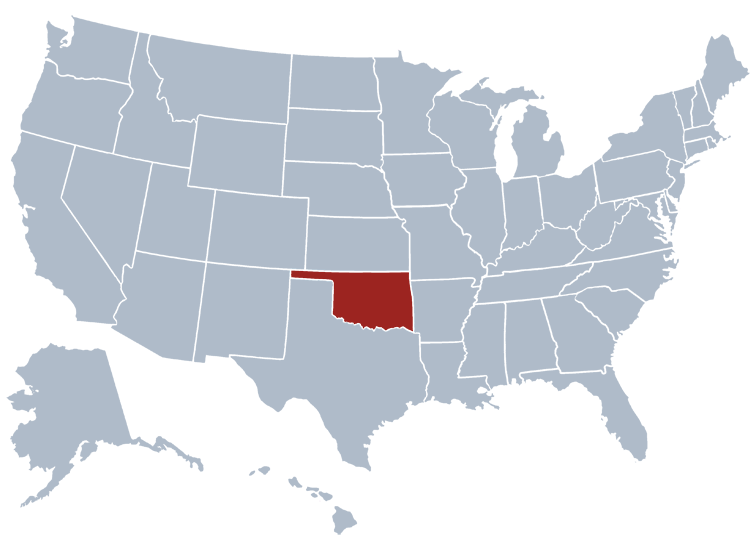
ok-largemapEarlier this week, The Oklahoman editorial board published an editorial praising Oklahoma policymakers for rejecting ObamaCare’s Medicaid expansion. As evidence, they cited FGA’s new enrollment explosion report.

From The Oklahoman:

During the 2016 legislative session, there was a strong push to expand Oklahoma’s Medicaid program to obtain funding from the Affordable Care Act. Ultimately, lawmakers declined to take that step. It’s proving to be a wise decision…

A recent report by the Foundation for Government Accountability notes that expansion enrollment exceeded projections by 322 percent in California, 276 percent in New York, 134 percent in Kentucky, 90 percent in Illinois, 60 percent in Ohio and 51 percent in Arkansas.

That means the cost of the 10 percent state share for Medicaid expansion will be commensurately higher as well. And federal data shows that Medicaid expansion spending was 49 percent higher per enrollee in 2015 than what was predicted when the law passed in 2010.

At the same time, Medicaid expansion isn’t generating the savings supporters promised, such as lowering the use of emergency rooms for routine care.

You can read the full editorial here.
FGA: Restore Work Requirements In Food Stamps

This week, the Foundation for Government Accountability published a new report on the growing food stamp crisis:

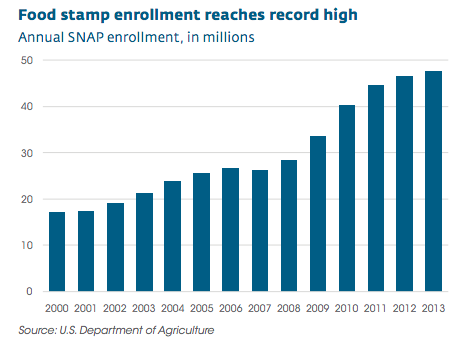
The food stamp program is one of the largest and fastest-growing welfare entitlements in the federal budget. Total enrollment reached a whopping 48 million in 2013, one of many record highs plaguing the program. Skyrocketing enrollment has led federal spending on food stamps to more than quadruple since 2000, reaching another record-high of nearly $80 billion in 2013.

Screenshot 2015-08-05 12.48.41

One key cause of this out-of-control spending is the recent explosion of enrollment among able-bodied childless adults. Although federal law requires these adults to work in order to receive food stamps, the Obama administration has awarded an unprecedented number of waivers to states, allowing able-bodied childless adults to receive taxpayer-funded food stamp benefits without working at all.

The problem may seem purely fiscal: food stamp spending is consuming a growing portion of the federal budget, putting at risk other critical spending priorities. But the consequences of this enrollment explosion go beyond just billions of dollars. The elimination of work requirements has resulted in more people remaining trapped in government dependency for far longer than they otherwise would, has kept more people in poverty, has stymied economic growth, and has contributed to a massive expansion of the welfare state.

Reinstating work requirements for able-bodied childless adults receiving food stamps has proven profoundly successful in decreasing food stamp enrollment, returning more people to work, and even increasing volunteerism.

The way forward for states is simple and clear. Governors should just decline to renew the federal waivers that have eliminated work requirements for able-bodied childless adults on food stamps. Doing so would reduce welfare enrollment, save federal taxpayer dollars, lift more people out of poverty, increase self-sufficiency, and spur economic growth.

The full paper — authored by Jonathan Ingram and Nic Horton — can be viewed here.