Townhall: Where Are All The ObamaCare Jobs?

For years, hospital lobbyists have promised that Obamacare’s Medicaid expansion would kick start states’ economies and produce thousands of new jobs. (Expanding welfare always stimulates the economy, right?)

This piece of their Obamacare sales pitch is critical because, according to their calculations, these new jobs will generate the necessary revenue to pay for states’ share of the Obamacare expansion costs. The Arkansas Hospital Association, for example, made a similar guarantee, promising that most of the state’s share would be covered by new tax revenue generated by new jobs.

But now that expansion has been up-and-running for more than two years, the data is starting to paint a clearer picture of the real economic impact. And, believe it or not, Obamacare expansion isn’t living up to the hype. Continue reading

Forbes: NE’s Medicaid Expansion Plan Puts Truly Needy In Danger

Co-authored by Nic Horton, Jonathan Ingram, and Josh Archambault

Nebraska legislators are currently considering another plan to bring Obamacare’s Medicaid expansion to the Cornhusker state. The proposal would create a new welfare program, dubbed the “Transitional Health Insurance Program,” for more than 130,000 able-bodied adults, costing taxpayers nearly $15 billion over the next ten years.

Nebraska policymakers have rejected all previous attempts to expand Medicaid under Obamacare. With expansion costs exploding in other states and federal funding now on the chopping block, it’s clear that their decision was the right one. And nothing in this new proposal should give them reason to reconsider. In fact, the latest plan, modeled after Arkansas’ “Private Option,” is Nebraska’s worst expansion proposal yet.

This model has failed to deliver on its promises everywhere it has been tried and would cost taxpayers billions of dollars more than a traditional expansion. In fact, Iowa has already scrapped its own version of this model and Arkansas’ expansion is scheduled by law to terminate later this year. Worse yet, the plan would also prioritize welfare for this new class of able-bodied adults over services for the truly needy. Continue reading

Townhall: No, Arkansas’ Obamacare Expansion Isn’t Saving Taxpayers Money

According to state law, Arkansas’ failed Obamacare expansion is set to expire at the end of this year. But Governor Asa Hutchinson has proposed overriding that deadline – which he signed into law last year – to continue providing welfare to able-bodied adults forever.

Hutchinson’s chief argument is that ending the program would create “a $100 million annual budget hole” due to lost budget “savings.” It’s a familiar refrain, used by former Democratic Governor Mike Beebe for years. There’s just one problem: it’s not true.

Arkansas’ so-called Private Option Medicaid expansion isn’t saving taxpayers money and allowing it to end won’t necessitate a massive tax increase or trigger the zombie apocalypse. In fact, allowing expansion to sunset would save taxpayers billions of dollars. Continue reading

Platte Institute: Arkansas Not a Model for Nebraska

A new paper by Jonathan Ingram and Nic Horton examine the impact an Arkansas-style Medicaid expansion would have on Nebraska:

Nebraska legislators have taken a thoughtful approach to the Affordable Care Act, carefully reviewing the evidence and ultimately declining to expand Medicaid to a new class of able-bodied adults under the law. Nevertheless, a small group of legislators lobby their colleagues each year to expand the program. The latest proposal, offered by Senator John McCollister, would copy the expansion models used by Arkansas and Iowa, homes of the highest profile “alternative” expansion models.

Under this approach, able-bodied adults receive regular Medicaid benefits through private health insurance plans sold on the Exchange, rather than through traditional Medicaid managed care. But these expansions have been unmitigated disasters and replicating the results in Nebraska would move the state backwards.

This new approach to Medicaid expansion is unaffordable and unpredictable, pushes adults out of private insurance and into taxpayer-funded welfare, puts the truly needy on the chopping block, discourages work, and shrinks the economy. So it should be no surprise that, last year, Iowa policymakers scrapped the model entirely and Arkansas enacted legislation to repeal the expansion altogether at the end of 2016. Nebraska policymakers should learn from these mistakes, not repeat them.

Read the full paper here.

Townhall.com: How the Senate Just Changed the ObamaCare Debate Forever

Last week, with little fanfare, the U.S. Senate passed a bill to begin dismantling Obamacare. Some pundits have spun the move as little more than “political posturing” or a toothless act that simply fulfills the campaign promises of a newly elected GOP majority. The truth is that this Senate vote is much bigger than Obamacare supporters would like you to believe. In fact, the Senate vote has literally changed the Obamacare debate forever.
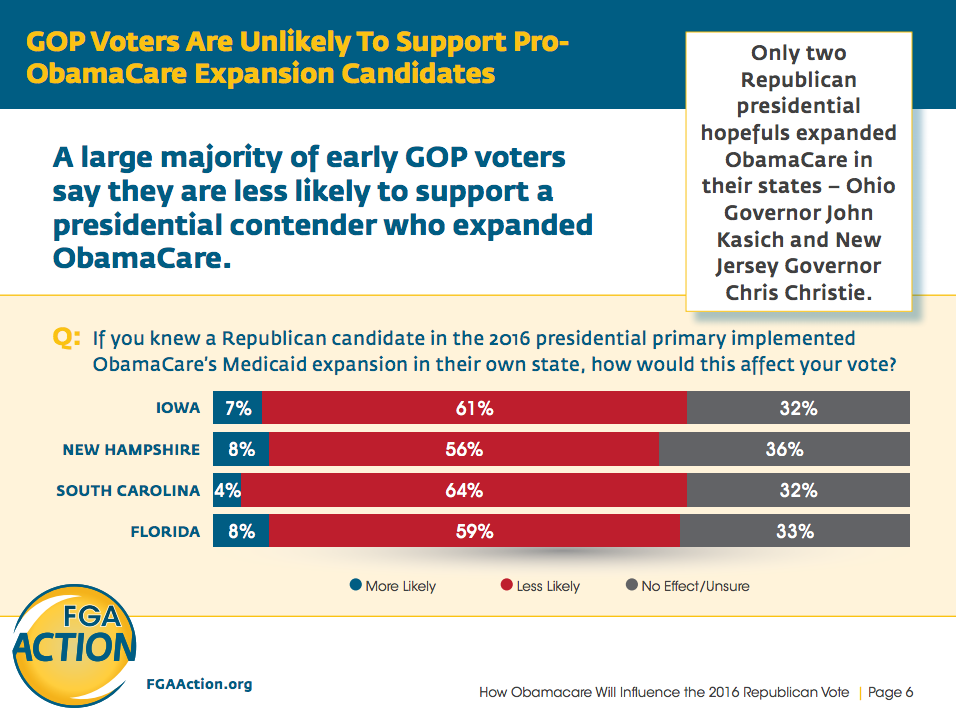
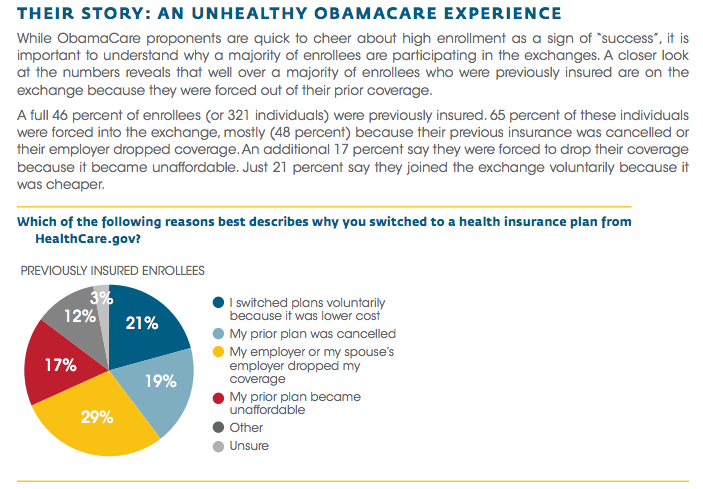
The Senate bill repealed the employer and individual mandates, repealed the Cadillac and medical device taxes, eliminated exchange subsidies, and removed the federal government’s authority to run the Obamacare exchanges. All good things.

But what may be the most significant—and least discussed—change is sure to send shockwaves through all 50 state capitals: the U.S. Senate voted to repeal Obamacare’s Medicaid expansion entirely.

To paraphrase Vice President Joe Biden, “This is a big freaking deal.” Continue reading

Forbes: UT Proposes Sick Tax To Pay For ObamaCare

By  Nic Horton, Jonathan Ingram, and Josh Archambault Mr. Horton is a Policy Impact Specialist, Mr. Ingram Research Director, and Mr. Archambault a Senior Fellow at the Foundation for Government Accountability

After the legislature blocked his Obamacare Medicaid expansion plans in 2014 and 2015, Utah Governor Gary Herbert (R) began working with legislative leaders to negotiate some kind of “compromise” to expand the program to more than 100,000 able-bodied adults. Although the deal is being negotiated in secret, some details have been leaked to the public.

According to the few specifics made public, the biggest component of the negotiated framework is to levy a new “assessment” on medical providers in Utah to help pay for the state’s share of expansion. But the so-called assessment is simply a new Obamacare tax on the sick that will not only raise health care costs for all Utahns, but add significantly to the national debt. Continue reading

FGA: What Exchange Enrollees Want, After King v. Burwell

A new, one-of-a-kind poll released yesterday by the the Foundation for Government Accountability takes a look at what ObamaCare exchange enrollees want in the wake of the King v. Burwell ruling. The poll surveyed exchange enrollees in only the 34 states that have not set up ObamaCare exchanges. Many of these enrollees would be personally impacted by a pro-King ruling.

Here’s a snapshot:

Screenshot 2015-06-16 14.19.05

Continue reading

Forbes: New Poll Confirms Voters Don’t Want State Obamacare Exchanges

By Jonathan Ingram, Nic Horton and Josh Archambault – Mr. Ingram is Research Director, Mr. Horton is Policy Impact Specialist, and Mr. Archambault is a Senior Fellow at the Foundation for Government Accountability.

Last week, the Foundation for Government Accountability released a groundbreaking poll of voters in federal exchange states that provides valuable insight into how voters want policymakers to respond to the pending King v. Burwell Supreme Court ruling.

In short, voters don’t want their state legislators to rescue Obamacare should the Supreme Court rule that health insurance subsidies cannot flow through HealthCare.gov. They blame Congress for a poorly written law and don’t want or expect states to clean up Washington’s mess. In fact, they’re prepared to vote against state lawmakers who try to set up Obamacare exchanges.

Voters Don’t Want To Live in An Obamacare State

If the Supreme Court strikes down subsidies in federal exchange states, voters don’t want their state legislators to rescue Obamacare. They see the issues presented in the King v. Burwell case as a problem created by Congress and the IRS; they don’t think states should bail them out.
Image and video hosting by TinyPic Continue reading