Townhall: No, Arkansas’ Obamacare Expansion Isn’t Saving Taxpayers Money

According to state law, Arkansas’ failed Obamacare expansion is set to expire at the end of this year. But Governor Asa Hutchinson has proposed overriding that deadline – which he signed into law last year – to continue providing welfare to able-bodied adults forever.

Hutchinson’s chief argument is that ending the program would create “a $100 million annual budget hole” due to lost budget “savings.” It’s a familiar refrain, used by former Democratic Governor Mike Beebe for years. There’s just one problem: it’s not true.

Arkansas’ so-called Private Option Medicaid expansion isn’t saving taxpayers money and allowing it to end won’t necessitate a massive tax increase or trigger the zombie apocalypse. In fact, allowing expansion to sunset would save taxpayers billions of dollars. Continue reading

Forbes: First-Of-Its-Kind Study Shows The Power Of Work

Co-authored by Nic Horton, Jonathan Ingram and Josh Archambault 

For too long, thousands of Kansans have languished in welfare, without hope of a better life. But thanks to one simple policy change, many Kansans are now on the path to a better life.

Under federal law, all able-bodied, childless adults in the food stamp program are required to work or train for work at least 20 hours per week. But with help from the Obama administration, most states have been waiving those requirements in recent years. Last year, for example, more than 40 states waived these critical requirements, fostering a culture of long-term dependency.

Image and video hosting by TinyPic

But in 2013, Kansas Governor Sam Brownback bucked the trend and instructed state officials to reinstate work requirements and time limits for able-bodied adults. Within three months, half of all able-bodied adults on food stamps had cycled off the program. Enrollment is now 75% lower for this group of adults than it was before work requirements took effect. Continue reading

Platte Institute: Arkansas Not a Model for Nebraska

A new paper by Jonathan Ingram and Nic Horton examine the impact an Arkansas-style Medicaid expansion would have on Nebraska:

Nebraska legislators have taken a thoughtful approach to the Affordable Care Act, carefully reviewing the evidence and ultimately declining to expand Medicaid to a new class of able-bodied adults under the law. Nevertheless, a small group of legislators lobby their colleagues each year to expand the program. The latest proposal, offered by Senator John McCollister, would copy the expansion models used by Arkansas and Iowa, homes of the highest profile “alternative” expansion models.

Under this approach, able-bodied adults receive regular Medicaid benefits through private health insurance plans sold on the Exchange, rather than through traditional Medicaid managed care. But these expansions have been unmitigated disasters and replicating the results in Nebraska would move the state backwards.

This new approach to Medicaid expansion is unaffordable and unpredictable, pushes adults out of private insurance and into taxpayer-funded welfare, puts the truly needy on the chopping block, discourages work, and shrinks the economy. So it should be no surprise that, last year, Iowa policymakers scrapped the model entirely and Arkansas enacted legislation to repeal the expansion altogether at the end of 2016. Nebraska policymakers should learn from these mistakes, not repeat them.

Read the full paper here.

Townhall.com: How the Senate Just Changed the ObamaCare Debate Forever

Last week, with little fanfare, the U.S. Senate passed a bill to begin dismantling Obamacare. Some pundits have spun the move as little more than “political posturing” or a toothless act that simply fulfills the campaign promises of a newly elected GOP majority. The truth is that this Senate vote is much bigger than Obamacare supporters would like you to believe. In fact, the Senate vote has literally changed the Obamacare debate forever.

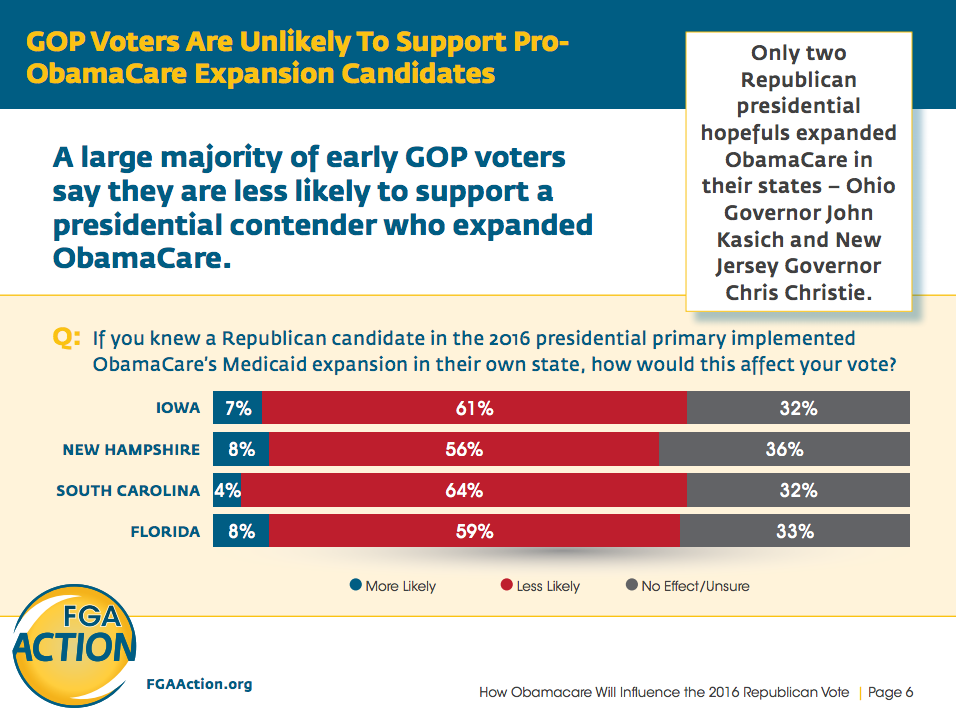
The Senate bill repealed the employer and individual mandates, repealed the Cadillac and medical device taxes, eliminated exchange subsidies, and removed the federal government’s authority to run the Obamacare exchanges. All good things.

But what may be the most significant—and least discussed—change is sure to send shockwaves through all 50 state capitals: the U.S. Senate voted to repeal Obamacare’s Medicaid expansion entirely.

To paraphrase Vice President Joe Biden, “This is a big freaking deal.” Continue reading

Townhall.com: Shocking Report Reveals Rampant Welfare Fraud in Arkansas

The Government Accountability Office routinely warns that states’ welfare programs are at high risk for waste, fraud, and abuse. A new report, released Wednesday by Arkansas’ Medicaid task force, brings these warnings to life.

The report highlights four key vulnerabilities in the state’s Medicaid program, a program originally designed to help truly vulnerable Arkansans. But it’s now clearer than ever that tens of thousands of other Arkansans – and even non-Arkansans – are benefiting immensely from the generosity of taxpayers, stealing limited resources from the truly needy.

Tens of thousands of Medicaid enrollees have out-of-state addresses.

According to the report, nearly 43,000 Arkansas Medicaid enrollees have addresses outside of the Natural State. Most of those addresses appear to be from neighboring states, none of which expanded Medicaid through ObamaCare as Arkansas did in 2014.

Rather than becoming a “good jobs magnet” as ObamaCare supporters had promised, the state is quickly turning into a Medicaid magnet – and not just for its neighbors.

In fact, several thousand Medicaid enrollees reside in states as far away as Florida, California, and Michigan. And nearly all of them had out-of-state addresses before they were authorized to receive Medicaid in Arkansas. Worse yet, the report identified 7,000 enrollees who appear to have never lived in the state.

Continue reading

Forbes: UT Proposes Sick Tax To Pay For ObamaCare

By  Nic Horton, Jonathan Ingram, and Josh Archambault Mr. Horton is a Policy Impact Specialist, Mr. Ingram Research Director, and Mr. Archambault a Senior Fellow at the Foundation for Government Accountability

After the legislature blocked his Obamacare Medicaid expansion plans in 2014 and 2015, Utah Governor Gary Herbert (R) began working with legislative leaders to negotiate some kind of “compromise” to expand the program to more than 100,000 able-bodied adults. Although the deal is being negotiated in secret, some details have been leaked to the public.

According to the few specifics made public, the biggest component of the negotiated framework is to levy a new “assessment” on medical providers in Utah to help pay for the state’s share of expansion. But the so-called assessment is simply a new Obamacare tax on the sick that will not only raise health care costs for all Utahns, but add significantly to the national debt. Continue reading

Forbes: AK Lawmakers Hire Star Lawyers to Stop ObamaCare Expansion

By Jonathan Ingram, Nic Horton, and Josh Archambault — Mr. Ingram is Research Director, Mr. Archambault is a Senior Fellow, and Mr. Horton is Policy Impact Specialist, at the Foundation for Government Accountability.

Alaska Governor Bill Walker (I) announced in mid-July that he was moving forward with plans to unilaterally expand Obamacare in the state. As we’ve previously written here at Forbes, Walker’s expansion plan is not only bad policy, it’s also likely illegal. Now, a courageous group of Alaska lawmakers – led by Senate President Kevin Meyer and House Speaker Mike Chenault –  are standing up to Gov. Walker’s attempted end-run around the legislature and hiring an all-star legal team to block Walker’s illegal actions.

Walker’s Unilateral Obamacare Expansion Violates Alaska Law

Alaska law clearly prohibits the governor from expanding Medicaid to any “additional groups … unless approved by the legislature.” This means that Gov. Walker could only expand Medicaid to a new class of able-bodied childless adults if this coverage group was already authorized by state law. Continue reading

Forbes: Governors Are Reducing Dependency

By Jonathan Ingram, Nic Horton and Josh Archambault — Mr. Ingram is Research Director,  Mr. Horton is Policy Impact Specialist and Mr. Archambault is a Senior Fellow at the Foundation for Government Accountability.

Governors across the country are leading a new welfare reform revolution. From Maine to Indiana to New Mexico, bold leaders are making common-sense changes that will preserve the safety net for the truly needy.

As this revolution continues to spread across the map, state policymakers need to know these policy changes – restoring work requirements for able-bodied adults without kids on food stamps – are already having transformative results for enrollees and taxpayers.

Work Waivers Foster Dependency

Although federal law requires able-bodied childless adults on food stamps to work or search for work, 42 states partially or fully waived that requirement in 2015. These waivers allow able-bodied adults to stay on the food stamps rolls indefinitely, regardless of whether they’re looking for work.

Image and video hosting by TinyPic

It’s no surprise, then, that able-bodied adults are staying on food stamps longer than ever, costing taxpayers and the truly needy who rely on the food stamp program for survival.

Continue reading

Forbes: Restoring Work Requirements Is Important Fix For Food Stamp Crisis

By Nic Horton, Jonathan Ingram and Josh Archambault

Over the last several years, even as the economy has started to improve, more and more Americans have become trapped in the food stamp program, now called the “Supplemental Nutrition Assistance Program” or SNAP.  In 2013, food stamp enrollment and spending hit all-time highs.

But a new report from the Foundation for Government Accountability provides governors and legislators with a roadmap to reverse this trend. The first step: getting able-bodied adults work-oriented and eventually off of welfare.

Able-Bodied Childless Adults Drive Food Stamp Explosion

So what’s causing the rise in food stamp dependency?

One key contributor is the growth in able-bodied childless adults on the program. Between 2000 and 2008, the number of able-bodied childless adults receiving food stamps hovered at or below one million.

But by 2013, a record-high 4.9 million able-bodied, childless adults were receiving food stamps. Federal spending on food stamps for these able-bodied adults skyrocketed to more than $10 billion in 2013, up from just $462 million in 2000.

Image and video hosting by TinyPic Continue reading